A Journalist's Guide to Verifying Images Before Publication
aimagedetector.ai Team · August 21, 2026 · 5 min read
In March 2023, journalist Eliot Higgins — founder of the investigative outlet Bellingcat — posted a series of AI-generated images depicting a fictional arrest of Donald Trump. They were made with Midjourney, clearly labeled as such by Higgins, and went viral within hours anyway, illustrating exactly how fast a convincing fake can outrun its own context.
That was 2023, when AI-generated hands still gave things away. It's a different landscape now. During the escalation between the US, Israel, and Iran in 2026, fact-checking teams including BBC Verify documented a steady stream of fabricated imagery — including a satellite photo edited to falsely show damage to a U.S. base in Qatar, built from a real image but altered with AI tools. Around the same period, fabricated images and videos claiming to show Venezuelan president Nicolás Maduro's capture racked up millions of views before fact-checkers could catch up, and continued circulating even after being debunked.
This isn't a hypothetical risk newsrooms are preparing for. It's a routine one they're already living with. Here's what a practical verification workflow looks like today.
Why the old visual checklist doesn't hold up anymore
For a while, the standard journalist advice was straightforward: check the hands, check the text, check for obviously wrong details. That advice isn't wrong, exactly — it's incomplete. Major generators have closed most of the gaps that made those checks reliable. A five-fingered hand is no longer meaningful evidence either way.
Researchers tracking disinformation campaigns have found that as older tells fade, new ones emerge — modern diffusion-model images often carry a distinct look: an oddly uniform, "too perfect" cinematic quality with soft lighting, textbook composition, and skin texture that's unnaturally smooth or free of ordinary human imperfections. These cues are real, but they're subtler than "count the fingers," and they're not something you can teach a newsroom to check reliably under deadline pressure.
The upshot: visual inspection should still be part of the process, but it can no longer be the whole process.
A practical verification workflow
- 1Check the source before you check the image. Where did this image come from — a verified account, a wire service, an anonymous social media post? A significant share of viral AI-generated misinformation during recent breaking-news events spread specifically through unverified accounts posting at the moment public attention was highest. Source credibility is still your first and cheapest filter.
- 2Reverse image search before anything else. If the image has circulated before — in a different context, a different location, a different date — a reverse image search will often surface that immediately, faster than any AI-detection method.
- 3Look for the current visual tells, not the outdated ones. Check lighting consistency, skin texture, and background coherence rather than hands alone. For the current, more complete list, see how to tell if a photo is AI-generated.
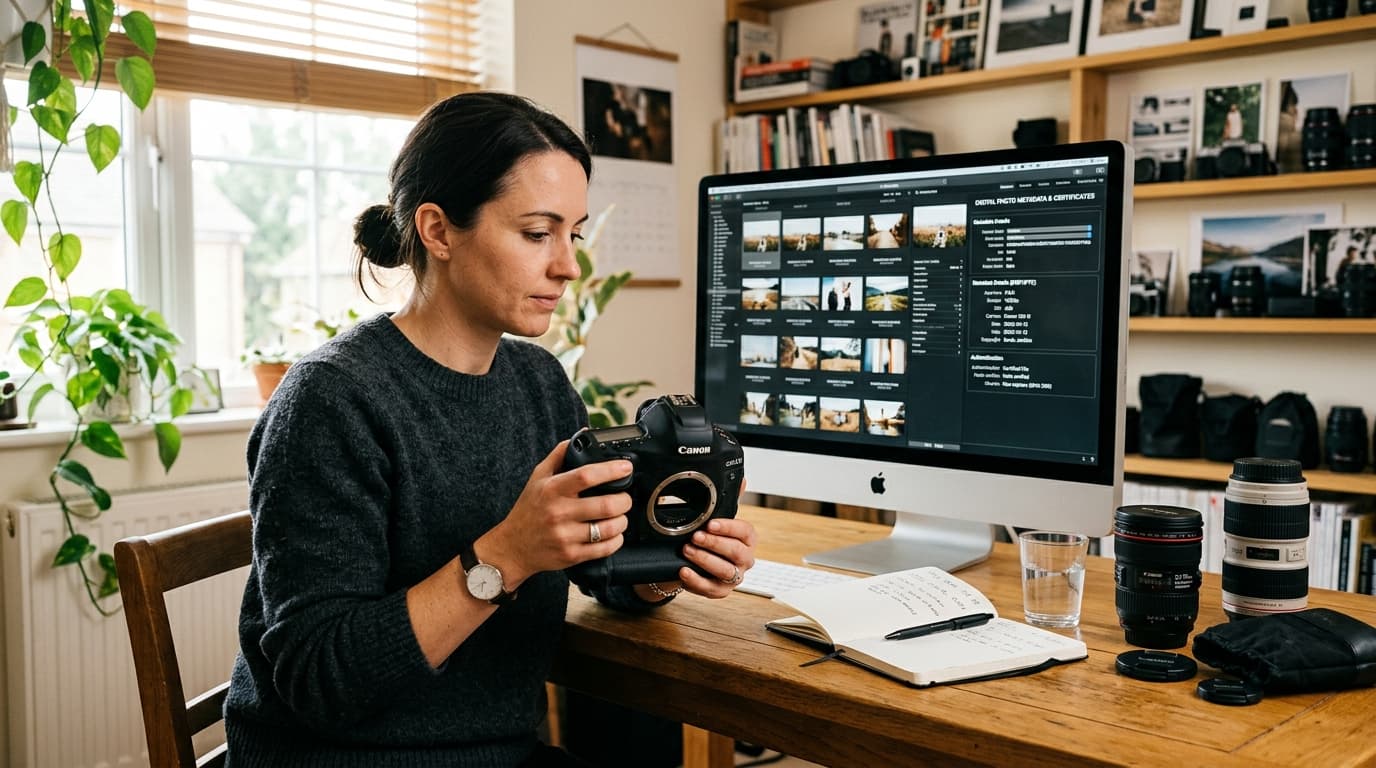
- 4Check for provenance metadata. Some platforms and cameras now embed C2PA Content Credentials, which can show whether an image was created or edited with AI tools. It's not present on most images circulating on social media — but when it is, treat it as a strong signal.
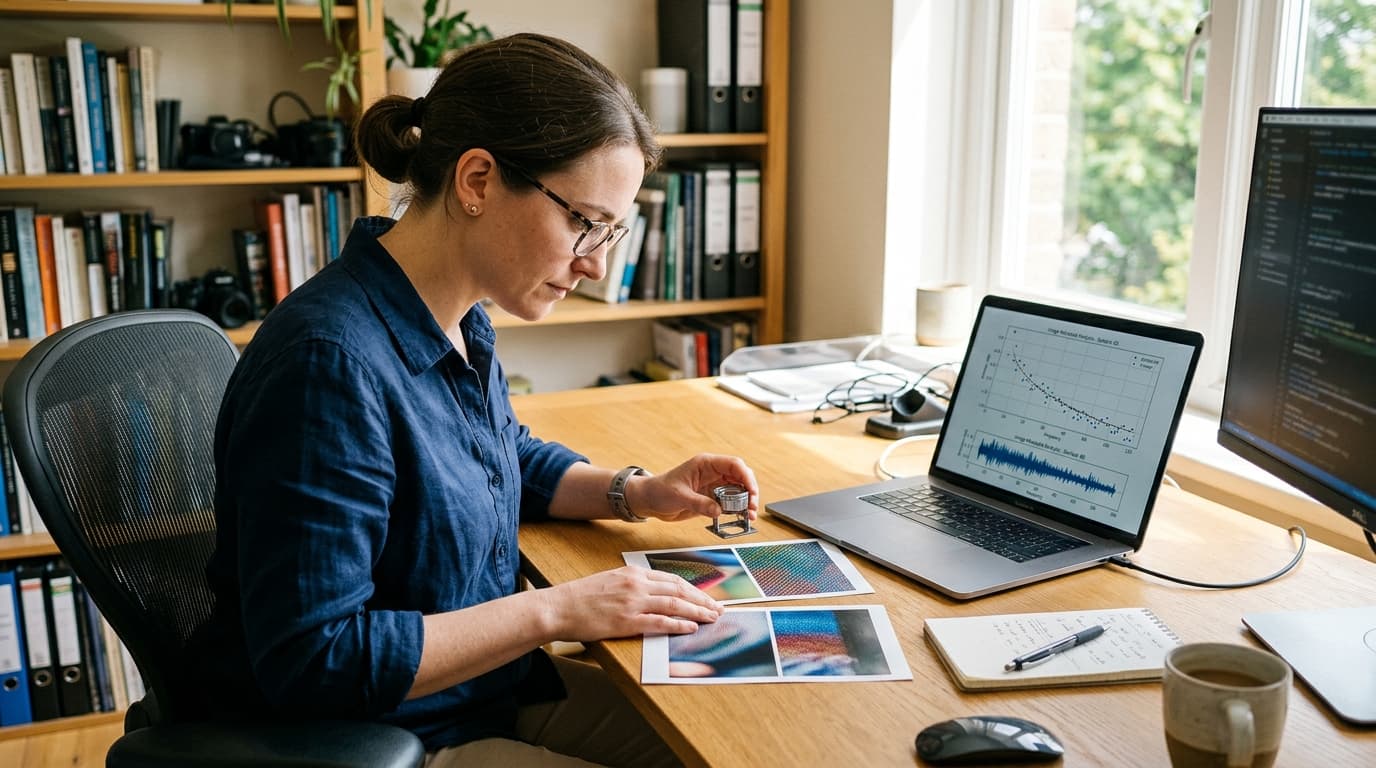
- 5Run it through an AI detection tool as a supporting check, not a final verdict. An AI image detector adds a layer that visual inspection alone can't provide — pixel-level and frequency-domain analysis that doesn't depend on the image "looking wrong" to a human. Use it as one input alongside the checks above, not as a replacement for editorial judgment.
- 6When in doubt, hold the image, not just the story. Newsrooms are generally careful about verifying claims in a story before publishing. The same discipline needs to extend explicitly to images, especially ones sourced from social media during a fast-moving story — the exact conditions under which fabricated imagery spreads fastest.
We go into exactly why detection tools aren't infallible either in can AI image detectors be fooled? — worth reading before you build a verification policy around any single tool, ours included.
Why this matters beyond any single story
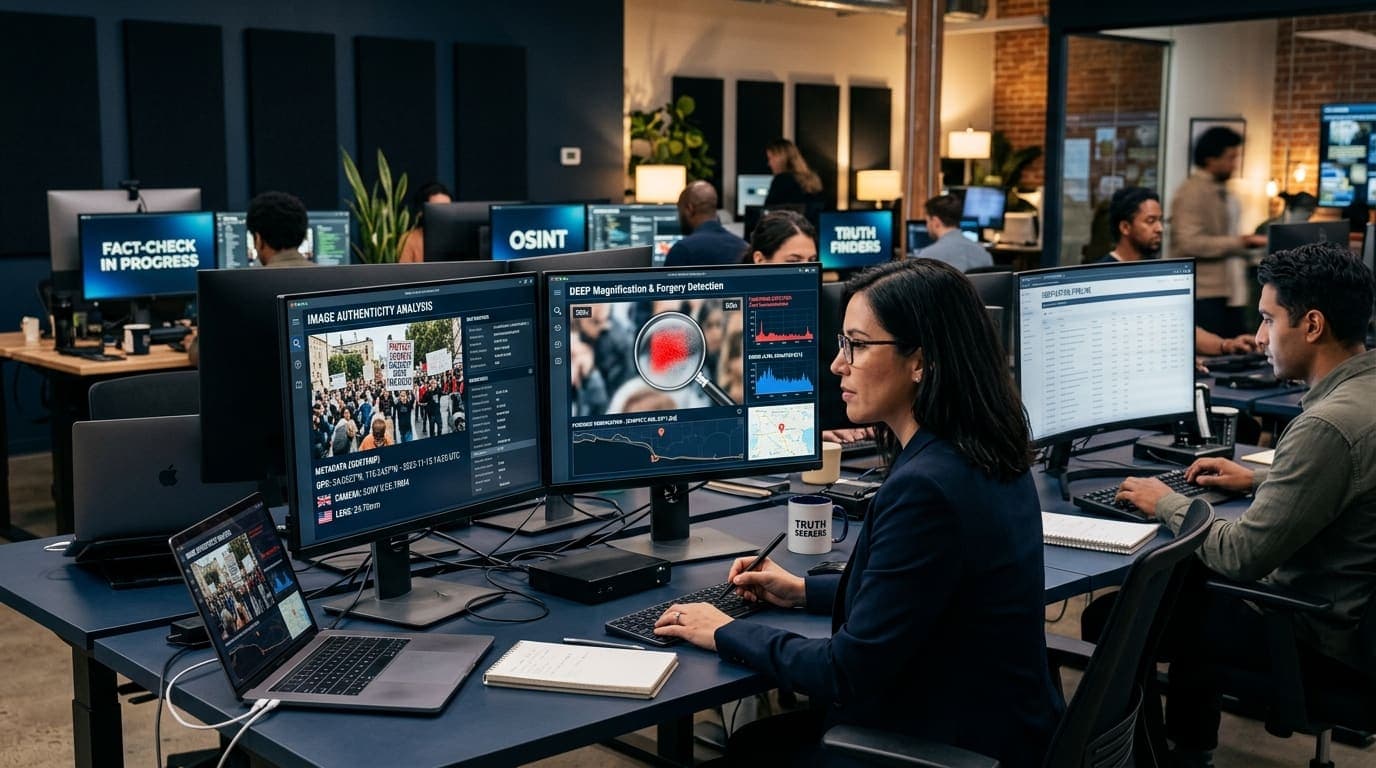
The volume problem compounds the accuracy problem. Media monitoring group NewsGuard has tracked thousands of AI-generated content farm sites publishing across more than a dozen languages, many producing continuous streams of plausible-looking but fabricated content with little to no human oversight. A newsroom isn't just verifying occasional suspicious images anymore — it's operating in an information environment where a meaningful share of what circulates was never real to begin with.
That's a genuine shift in the baseline, and it's part of why building image verification into standard editorial workflow — not treating it as a special step for "suspicious" stories only — has become standard guidance from journalism organizations and researchers working on this problem.
The realistic goal
No verification method, including AI detection, gets you to certainty. The realistic goal — echoed across recent journalism research on this topic — has shifted from definitive identification to informed probability assessment: gathering enough independent signals (source, reverse search, visual inspection, provenance metadata, and detection tooling) that your editorial judgment is well-supported rather than resting on any single check.
That's not a lower bar because the tools are worse. It's a more honest bar, because certainty was never really on the table — it just used to be easier to fake confidence in it.
The same verification discipline applies to video, not just still images — breaking-news footage and submitted video clips deserve the same source, context, and detection checks, run through an AI video detector rather than judged on visual inspection alone.
It applies to audio too: a leaked recording or a quote attributed to an audio clip deserves the same scrutiny, run through an AI voice detector rather than taken at face value because a voice sounds familiar.
Verifying an image before publication? Run it through our free AI image detector as one part of your workflow — see the full confidence breakdown, not just a yes or no.
Try our free AI image detector →