How Insurance Companies Are Using AI Image Detection to Catch Fraud
aimagedetector.ai Team · August 16, 2026 · 5 min read
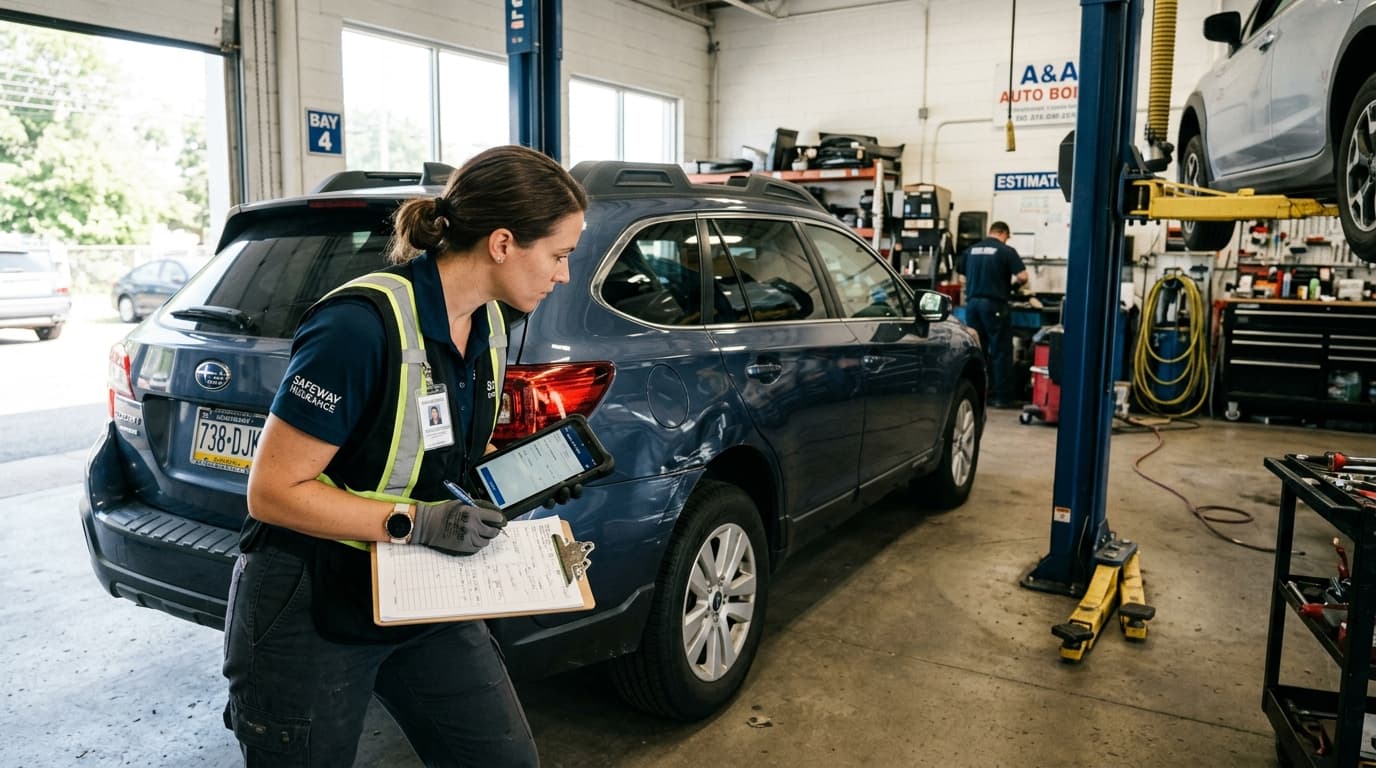
In one documented case reported by the BBC, a claimant submitted a photo of a damaged Land Rover to support an insurance claim — with an AI-edited license plate. A near-identical image with a different plate turned up in a second, separate claim. UK insurer Admiral, which caught both submissions before any payout was made, also flagged a case where damage to the rear of a vehicle had been digitally exaggerated to look worse than it was.
These aren't isolated incidents. Admiral reported a 71% year-over-year rise in detected fraud in 2025, tying part of that increase directly to AI-generated and AI-edited images. Industry-wide, Verisk's 2026 State of Insurance Fraud Study found that 98% of insurers now agree that AI editing tools are fueling a rise in digital fraud — and 99% say they've already encountered manipulated or AI-altered documentation firsthand. Only about a third feel confident they can actually detect it.
Here's what's changed, and how insurers are adapting.
Why claim photos became a fraud target
Modern claims processes rely heavily on submitted images rather than in-person inspection — a photo of car damage, a picture of water damage in a home, an image of a receipt for reimbursement. That efficiency is exactly what makes the process exploitable: as one law firm analysis of the trend put it, insurers have long paid claimants based on submitted images of damage, on the assumption that a photo reliably represents reality. Generative AI breaks that assumption. A claimant can now use freely available AI editing tools to make existing damage look worse, alter a document's details, or in some cases fabricate a damage photo that doesn't correspond to any real incident at all — often in under two minutes, with no special skill required.
Consulting firm Gen Re estimates the number of AI-enhanced insurance fraud cases in the US grew from fewer than 20,000 in 2022 to more than 80,000 by 2025 — a fourfold increase in three years.
The three patterns insurers are seeing most
Based on public reporting from insurers and fraud-technology vendors, submitted claim fraud tends to fall into a few recognizable categories:
- 1Edited real photos. The most common pattern isn't a fully synthetic image — it's a real photo of real damage, digitally altered to look more severe than it actually is, or reused with a swapped license plate or timestamp to support a duplicate claim.
- 2Fully AI-generated damage. Less common but growing: images of damage that never happened at all, generated from scratch to support a claim for a loss that didn't occur.
- 3Assembled "synthetic claims." Fraud-detection vendors describe an emerging pattern where fraudsters don't submit just one fabricated photo, but an entire internally consistent claim package — fake damage photos, repair invoices, and contractor assessments, all generated together to pass automated review from intake through adjudication.
How insurers are catching it
- 1Multi-angle and reference-object requirements. One of the most straightforward countermeasures, recommended in legal and fraud-prevention guidance, is requiring several photos of damage from different angles and distances, ideally including a reference object of known size in the frame. Multi-angle consistency is harder to fabricate convincingly than a single image.
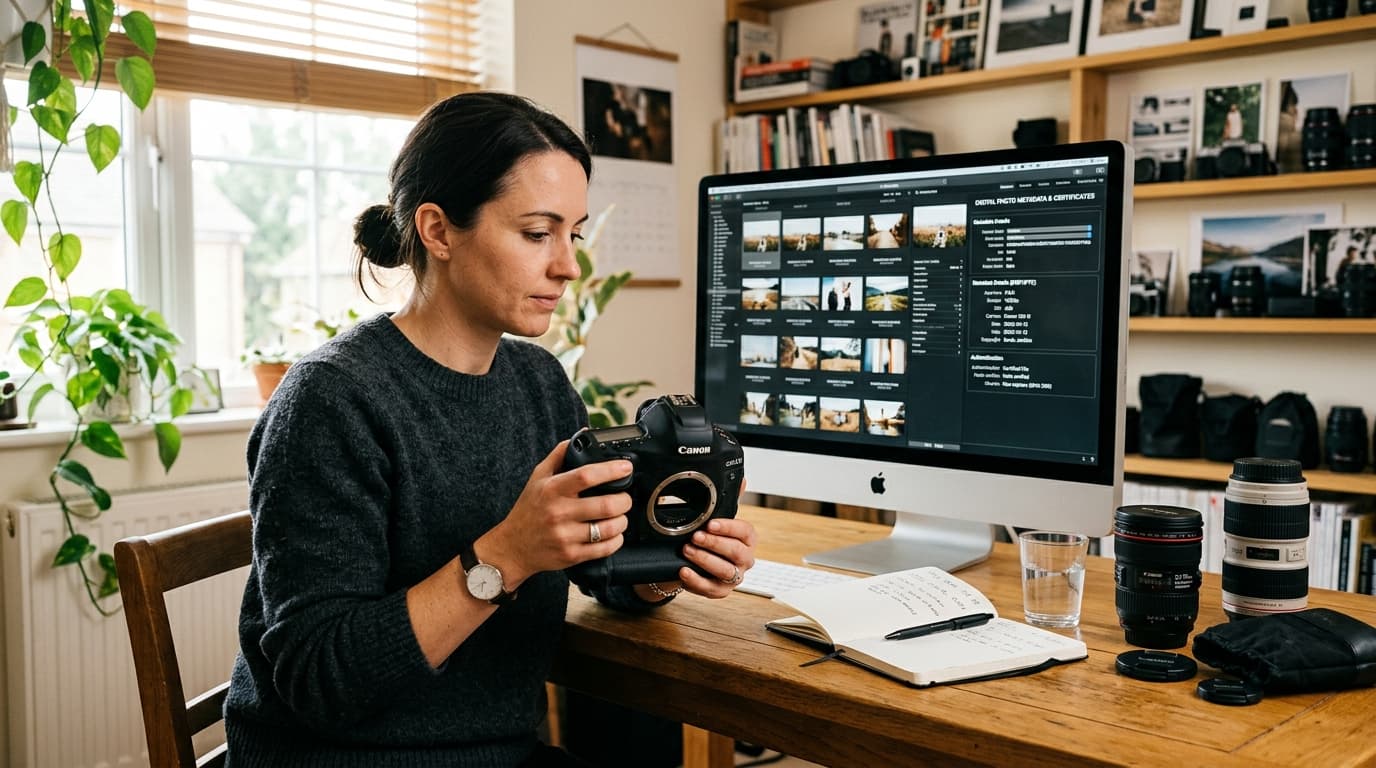
- 2Metadata and provenance checks. In one case reported by an insurance technology publication, a special investigation unit's forensic review found metadata timestamps that predated the claimed accident by years, alongside pixel-level anomalies consistent with AI editing — evidence strong enough to deny the claims and expose a fraud ring before any payout.
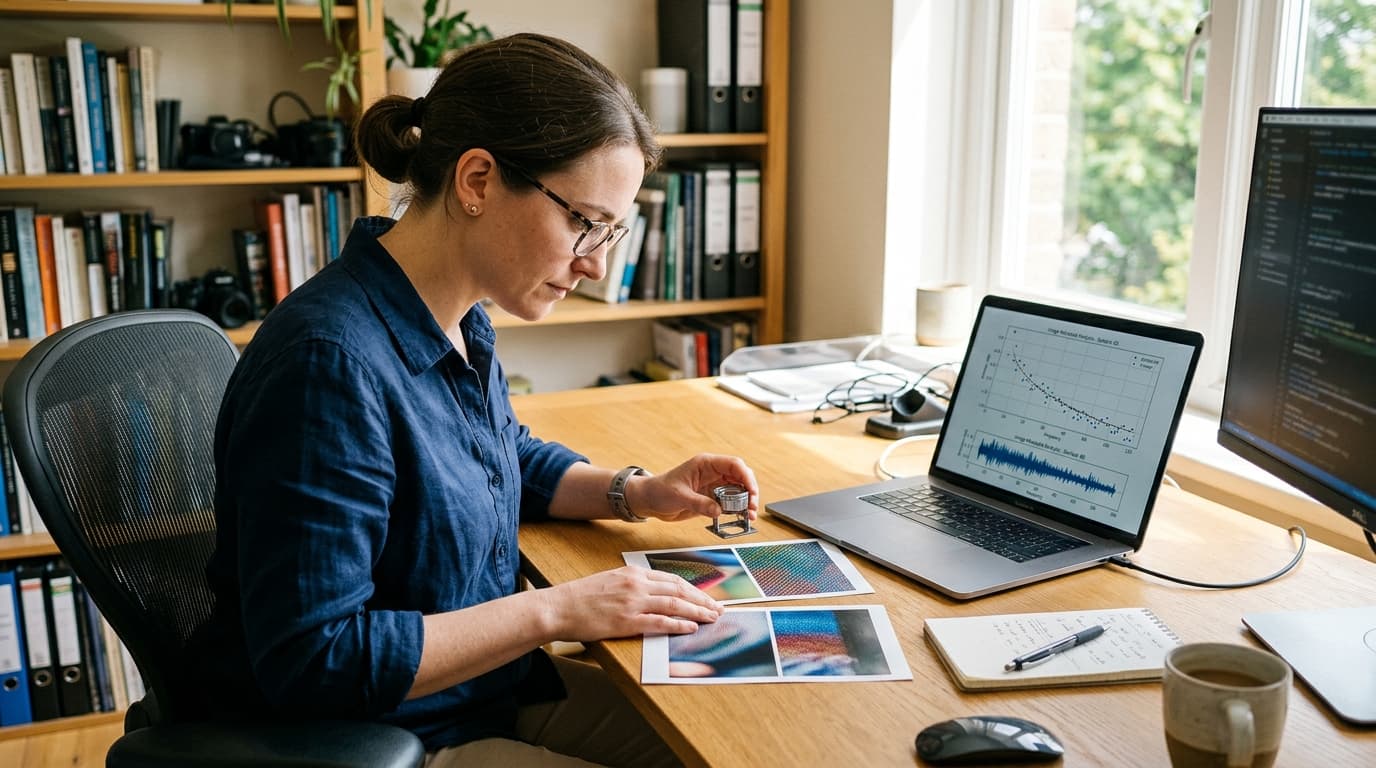
- 3AI-based image detection software. Rather than relying solely on manual review, insurers are increasingly deploying detection tools that analyze pixel-level and generation artifacts the way we describe in what an AI image detector actually checks for — signals that aren't reliably visible to a claims adjuster reviewing images by eye, however experienced.
- 4Live remote inspection. For higher-value or higher-risk claims, some insurers are increasing use of real-time video inspection — directing a claimant to pan, zoom, and capture specific features live over a video call — which is significantly harder to fake convincingly than a submitted still image.
Claim evidence isn't limited to still photos, either — dashcam footage and video walkthroughs are increasingly part of the submission, and they carry the same manipulation risk. An AI video detector checks that footage for the same kind of generation and editing artifacts.
Why this matters for claims teams specifically, not just fraud specialists
A recurring theme across insurance industry reporting on this shift is that claims adjusters, not just dedicated fraud investigators, are now on the front line. Traditional claims staff are trained to evaluate the facts of a loss — not to critically assess whether the supporting photo evidence has been digitally altered. As one industry analysis put it, a single photo or document can no longer be taken at face value by default in routine claims review, which means image verification is becoming a standard part of the claims workflow rather than a specialized escalation step reserved for suspicious cases.
That shift matters because of scale: insurers process far too many claims for every case to receive deep manual forensic review. The practical solution industry analysts point to is layered — automated detection flags likely-manipulated images for closer review, while routine claims proceed with only that added checkpoint, rather than adding manual investigation to every single submission.
What this means for claims workflows going forward
None of this means every claim needs to be treated with suspicion, or that legitimate policyholders should expect friction. It means claim photo verification is moving from an occasional special step to a standard part of the process — much the way document verification became routine in other industries once forgery got easier. Detection tools are one part of that layered approach, not a replacement for good claims judgment; like any detection method, they're not infallible on their own (see can AI image detectors be fooled? for more on that), which is why they work best combined with the multi-angle, metadata, and live-inspection checks above rather than relied on in isolation.
For a concrete example of what that check actually surfaces, we generated a fake vehicle damage photo with AI and ran it through our own detector — the full forensic report is published in that case study.
Reviewing a submitted claim photo? Check it with our free AI image detector as one part of your verification process.
Check it with our free AI image detector →